
A Practical Guide to Computer Vision for Small and Mid-Sized Businesses
By Zechariah Myrick · June 6, 2026 · 7 min read
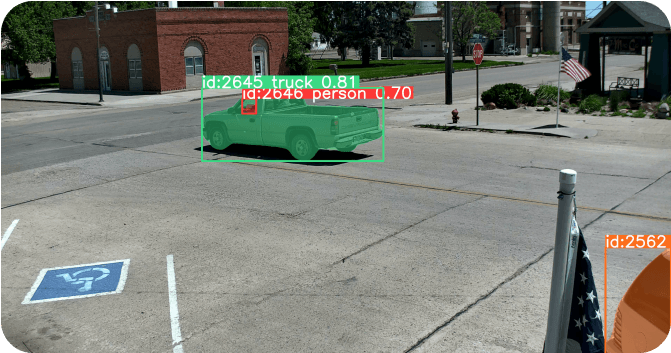
Computer vision is often presented as an exotic technology reserved for large manufacturers and autonomous vehicles. The underlying tools are now accessible to smaller teams too, but accessibility does not make every camera workflow a good investment. The useful question is whether a specific visual task happens often enough, costs enough, and can be measured well enough to justify a pilot.
Five use cases worth evaluating
- Inventory and stock counting. Compare a camera-assisted count with the current inventory process, including the cases where packages overlap or labels cannot be seen.
- Inventory exceptions. Compare observed stock or pour events with point-of-sale records and send mismatches to a person for review.
- Quality control. Apply a repeatable visual check and route uncertain or failed items to an inspector.
- Safety support. Flag events such as a blocked exit or missing protective equipment for prompt human review; do not treat a model alert as a final safety determination.
- Customer flow analytics. Test whether aggregated, privacy-reviewed movement counts can answer a staffing or layout question without identifying individuals.
A promising first project is narrow, observable, frequent enough to measure, and connected to a decision a person already understands. A camera feed alone is not a use case; the value comes from what someone can do differently with a reliable observation.
The decision checklist: answer this before buying a camera
- 1. What exact event is visible? Write an observable statement such as 'a pallet crossed this line' rather than a broad goal such as 'improve the warehouse.'
- 2. What decision follows? Identify who receives the observation, what they may do, and when a person must review it.
- 3. Can the camera see it consistently? Test distance, angle, glare, darkness, occlusion, weather, motion blur, dirt, and ordinary scene changes.
- 4. What is the baseline? Record current time, delay, missed events, false alarms, rework, or loss before introducing the model.
- 5. Which error matters more? Price a miss and a false alert separately; the acceptable tradeoff depends on the workflow.
- 6. What data is necessary? Decide what is processed, retained, transferred, labeled, or deleted, and whether people or biometric information can appear.
- 7. What happens during uncertainty or failure? Define no-decision, human-review, offline, camera-failure, and rollback behavior.
- 8. What earns expansion? Set the test period, acceptance metrics, review workload, operating cost, and stop condition before the pilot begins.
What it really takes to get started
You need a clear problem, a camera angle that can consistently see the relevant event, and representative examples from the real environment. The amount of data varies with lighting, object variety, accuracy requirements, and how costly a false alert would be. Pretrained models can shorten development, but the pilot still needs site testing and a human-review plan before it becomes operational.
How to judge the ROI before buying anything
- Measure the baseline. Record how often the task happens, how long it takes, and what errors or delays cost today.
- Price false alerts. A model that saves time but creates constant review work may move the cost instead of reducing it.
- Include operations. Cameras, cleaning, connectivity, monitoring, retraining, and support belong in the business case.
- Set a decision date. Agree in advance what result earns expansion, revision, or a stop.
What a bounded pilot should produce
A credible pilot is more than a video with bounding boxes. It should produce a representative test set, a documented camera position, event definitions, error examples, a human-review queue, end-to-end timing, a data-retention plan, device or cloud health signals, and a decision memo that compares the result with the original baseline.
- Model result: task-specific recall, precision, or another agreed metric on held-out footage.
- Operational result: the number of alerts a person reviews, time to act, missed events, and failure or no-decision rate.
- System result: capture uptime, end-to-end latency, storage and bandwidth use, and recovery behavior.
- Business result: the change in the original time, delay, rework, loss, or service measure, with operating cost included.
Avoiding the classic mistakes
- Don't boil the ocean. Automate one painful, measurable task first. Win, then expand.
- Mind the camera, not just the model. Bad lighting and bad angles kill more projects than bad algorithms.
- Design privacy before collection. Keep only what the purpose requires, restrict access, state the retention period, and be transparent with affected people. Edge processing can reduce transfer but does not remove these responsibilities.
- Measure the before. You can't prove ROI if you never wrote down how long the manual way took.
Computer vision can be practical for a small or mid-sized business when the problem is narrow, visual, frequent, and measurable. If you describe what you want a camera to observe, where it happens, and what someone would do with the result, I will reply with the first feasibility question I would test. A useful answer may be a pilot, a simpler sensor, a process change, or a reason not to build.
Sources and local context
- AI Risk Management Framework Core — NIST AI Resource Center
- Protecting Personal Information: A Guide for Business — Federal Trade Commission
- FTC Warns About Misuses of Biometric Information and Harm to Consumers — Federal Trade Commission
- DeepStream SDK Overview — NVIDIA